
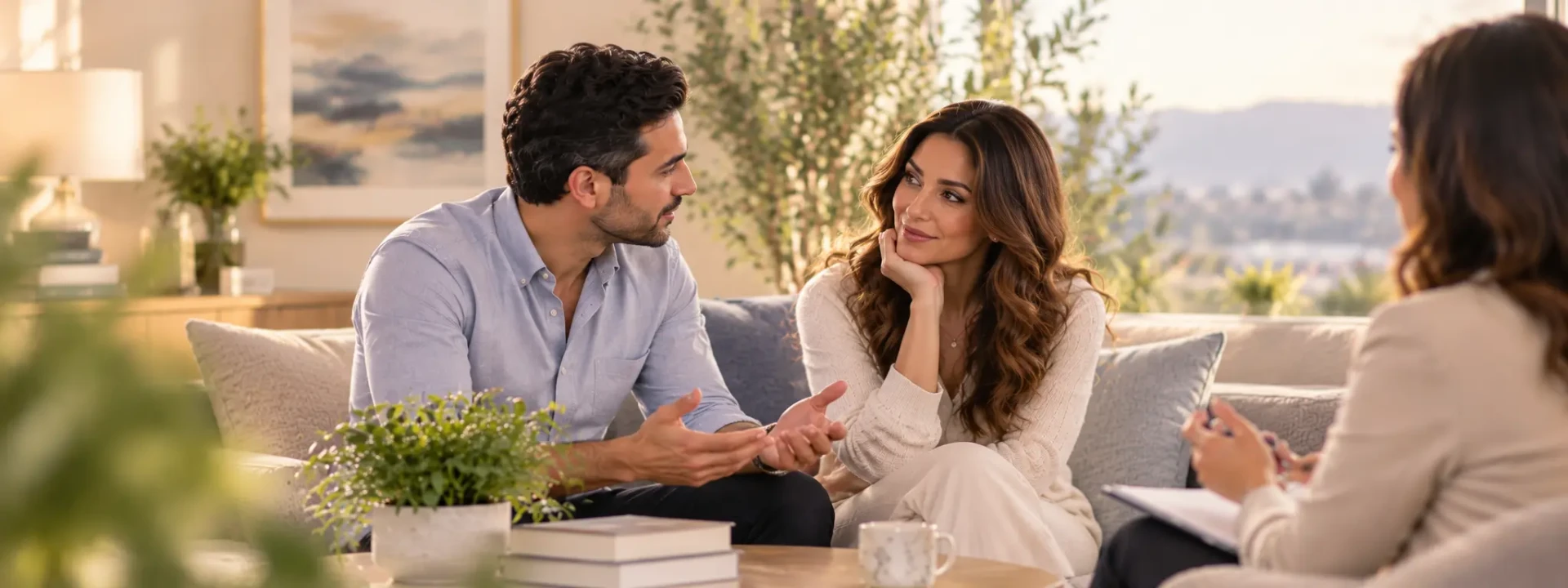
Every relationship has its ups and downs. But sometimes arguments start repeating, emotional distance grows, and partners feel they no longer understand each other. Couples therapy offers a safe, neutral space where both people are heard, unhealthy patterns are recognised, and a new way of being together can be found.
What is couples therapy?
Couples therapy is a form of psychotherapy in which the therapist works with both members of the relationship. Its aim is not to find who is "to blame". The focus is the relationship itself: how two people talk to each other, how they respond to each other's needs, and what cycle forms between them in difficult moments. Extensive research over recent decades shows that evidence-based couples therapy is effective for many couples and can meaningfully improve relationship satisfaction, communication quality and emotional intimacy.
When is couples therapy needed?
- Arguments repeat and never reach a resolution
- Feeling emotionally distant or lonely next to your partner
- Less intimacy and closeness
- Criticism, contempt or long silences after a fight
- A crisis of trust or infidelity
- Disagreements about children, family or finances
- Pressure from migration, a job change or a new baby
- Doubts about continuing the relationship
A relationship doesn't need to be in crisis. Many couples come to prevent problems and strengthen a relationship that is still good.
Evidence-based approaches
[In sessions, Dr. Aghaei draws on the following evidence-based, research-driven approaches:]
Emotionally Focused Couples Therapy (EFT)
Developed by Dr. Sue Johnson, this approach is grounded in attachment theory. In EFT, conflict is often seen as a sign of unmet emotional needs, such as the need for safety, being seen and closeness. The therapist helps partners recognise the negative cycle between them and, instead of attacking or withdrawing, express their real needs.
The Gottman Method
Over decades of research, Dr. John Gottman and colleagues studied couples' communication patterns and identified four destructive ones: criticism, contempt, defensiveness and stonewalling (shutting down). In this method, partners learn to recognise these patterns, practise healthy conversation skills and strengthen the "friendship" within the relationship.
Cognitive-Behavioural Couples Therapy
This approach addresses the thoughts, beliefs and behaviours that fuel conflict. Partners learn practical skills such as problem solving, active listening and expressing needs without blame.
The choice of approach depends on each couple's circumstances, needs and goals, and a combination is used when helpful.
How sessions work
First session
Getting to know you, hearing both perspectives and understanding the main issues in the relationship
Assessment
[If needed, one individual session with each partner]
Setting goals
Agreeing on what both of you want to change
Therapy sessions
Working on communication patterns, practising skills and between-session exercises
Session length
[45 minutes]
Number of sessions
Depends on each couple and is reviewed throughout therapy.
Sessions are held in person and online. Online sessions are available to Persian speakers worldwide, in Persian and with full understanding of the Iranian cultural context.
Frequently asked questions
What if my partner won't attend?+
You can begin with individual sessions. Change in one person often affects the whole relationship and can sometimes open the way for the other partner to join.
Will the therapist take sides?+
No. The therapist is neutral and sees the relationship as the main client. The aim is to help both of you.
Is online couples therapy as effective as in person?+
Research shows online therapy has comparable effectiveness to in-person sessions for many clients, provided there is a calm, private space for the session.
Will our information stay confidential?+
Yes. All conversations are confidential under the professional ethics of psychology [except where the law or people's safety requires otherwise].
When will we see results?+
Every relationship is different. Many couples notice changes in how they talk after a few sessions, but lasting change takes time and practice.
Accepting that a relationship needs help is not a sign of weakness; it is a sign that it matters to you.
Book a couples therapy sessionOther areas
This page is for educational purposes and is not a substitute for a professional assessment. If there is immediate danger, violence or a crisis, contact your local emergency services.